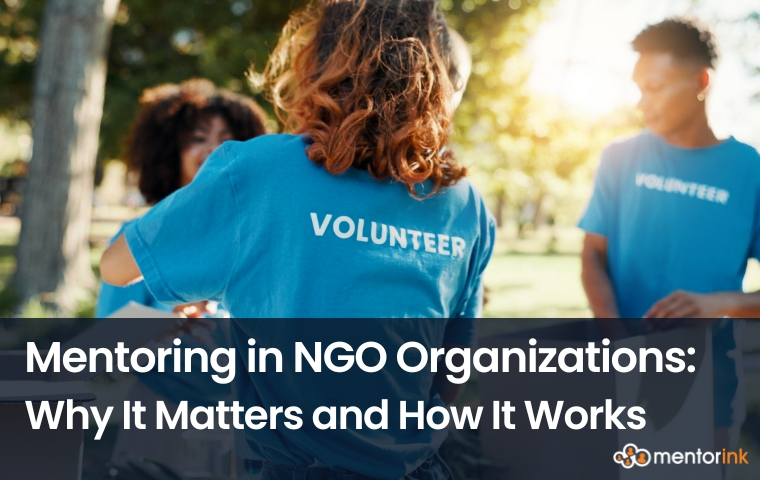
NGO work is built around people.
A volunteer coordinator is onboarding new volunteers. A program manager is preparing a donor report. A field team is responding to a challenge on the ground. Meanwhile, someone is trying to organize next month’s activities before today’s priorities change again.
For many NGO organizations, this is simply a normal Tuesday.
The work is deeply meaningful, but it is also complex. Teams may be spread across countries, cultures, languages and time zones. Program managers balance community needs with donor expectations. Volunteers come and go. Priorities shift quickly. And somehow, there always seems to be one more urgent thing to address.
That is why mentoring in NGO organizations deserves more attention. Not as another process to manage, but as a practical way to support the people who make the mission possible.
Importance of Mentoring in NGO Organizations
NGO organizations invest significant effort in supporting communities, beneficiaries and social impact initiatives. Yet the people delivering that impact often have limited time and space for their own development.
As organizations grow, expand into new regions or navigate increasing complexity, informal learning becomes harder to sustain on its own. Mentoring provides a structured way to support growth across the organization while preserving the human-centered nature of nonprofit work.
Why Mentoring Matters in NGO Work
Unlike many professional skills, some of the most important lessons in NGO work are difficult to document.
How do you build trust with a local community? How do you navigate competing stakeholder expectations? How do you make decisions when resources are limited and priorities keep changing?
The answers often come from experience rather than process documents.
That is one reason mentoring has become increasingly valuable in nonprofit environments. It creates opportunities for people to learn from those who have already navigated similar situations and challenges.
What Mentoring Actually Supports in NGOs
When mentoring is structured intentionally, it can support a wide range of development goals across NGO organizations.
Stronger Onboarding for Employees and Volunteers
Joining an NGO often means learning much more than a role description. New employees and volunteers need to understand the organization’s mission, communities, stakeholders and ways of working. Mentoring helps them gain that context faster and feel connected from the start.
Leadership Development for Program and Field Teams
Many nonprofit leaders are promoted because of their expertise, commitment or impact in the field. Mentoring helps emerging leaders develop the skills needed to lead people, manage complexity and make decisions with confidence.
Knowledge Transfer Between Experienced and Newer Team Members
Some of the most valuable knowledge in NGOs is difficult to capture in documentation alone. Mentoring helps organizations share lessons learned, practical insights and institutional knowledge across generations of employees and volunteers.
Emotional Resilience and Reflective Practice
Working closely with communities and social challenges can be incredibly rewarding, but it can also take an emotional toll over time. Mentoring creates a space for reflection, perspective and support, helping people process challenges and learn from difficult situations.
Inclusion, Belonging and Cross-Cultural Understanding
Many NGOs bring together people from different backgrounds, regions and cultures. Mentoring can help strengthen understanding, build connections and create a greater sense of belonging across diverse teams.
Better Collaboration Across Regions, Programs and Partners
When teams work across multiple offices, countries or program areas, they can easily become disconnected from one another. Mentoring creates opportunities for people to build relationships across organizational boundaries and better understand different perspectives and priorities.
Clearer Career Growth in Mission-Driven Work
Career paths in nonprofit organizations are not always straightforward. Mentors can help individuals explore opportunities, identify development goals and better understand potential pathways within the sector.
While these outcomes may look different from one organization to another, they all point to the same reality: strong NGO programs depend on capable, supported and connected people. Mentoring helps create the conditions for that growth to happen more intentionally.
Mentoring Models for NGO Organizations
NGO organizations rarely operate in a simple reporting structure. Employees, volunteers, field teams, local partners and community leaders often learn from one another every day. Mentoring programs can be designed around these real-world relationships.
Some practical NGO mentoring models include:
- Volunteer mentoring: Experienced volunteers support new volunteers during their first months, helping them understand the mission, community expectations and how to contribute with confidence.
- Field worker mentoring: Experienced field staff mentor newer colleagues on community engagement, local partnerships, cultural sensitivities and on-the-ground decision-making.
- Program manager mentoring: Senior program leaders support program managers who are navigating donor relationships, reporting requirements, partner coordination and complex stakeholder expectations.
- Field-to-headquarters mentoring: Field teams and headquarters employees are paired to exchange perspectives, helping central teams understand local realities while field teams gain more visibility into strategy, operations and organizational priorities.
- Cross-regional mentoring: Employees from different countries or regions are connected to share practices, learn from different cultural contexts and strengthen collaboration across the organization.
- Community leadership mentoring: Experienced community leaders, advocates or program alumni mentor emerging local leaders, helping build long-term capacity within the communities the organization serves.
The most effective model depends on what the organization wants to strengthen: volunteer engagement, field team support, leadership development, cross-regional learning or local capacity. For NGOs, mentoring works best when it reflects the real relationships that already shape the work.
Coaching and Mentoring in NGOs
Coaching and mentoring in NGOs are often mentioned together, but they serve different purposes.
Coaching is typically focused on a specific goal, challenge or skill. For example, an NGO leader might work with a coach to improve stakeholder communication, strengthen leadership capabilities or navigate a particular organizational challenge.
Mentoring takes a broader and often longer-term approach. Mentors share experience, perspective and practical insights to help others navigate their roles, careers and professional development. Rather than focusing on a single objective, mentoring supports ongoing learning and growth.
In NGO organizations, both approaches can play an important role. Coaching can help individuals develop specific skills, while mentoring provides the guidance, context and support that often comes from lived experience within the sector.
How Mentorink Can Support NGO Mentoring Programs
In many NGOs, mentoring already happens informally. The challenge is making these relationships easier to create, follow and sustain without turning them into another heavy process.
- Match people across programs, regions, languages, roles and development needs.
- Create guided mentoring journeys so mentors and mentees know where to start and how to keep the conversation moving.
- Support different mentoring goals, from volunteer onboarding and leadership development to field-to-HQ connection and knowledge transfer.
- Reduce manual coordination by replacing spreadsheets, scattered messages and one-off follow-ups with a more structured system.
- Send reminders and check-ins that help participants stay engaged without adding more work for program managers.
- Track participation, engagement and feedback without monitoring private mentoring conversations.
- Manage multiple mentoring programs from one place, especially when different teams, regions or participant groups need different journeys.
For resource-limited NGO teams, this means mentoring can become easier to manage, easier to scale and easier to sustain over time.
Example NGO Mentoring Programs Supported Through Mentorink
The shape of an NGO mentoring program can change depending on the audience, mission area and development goal. Some programs support employees or volunteers inside the organization, while others are designed for students, young professionals or community members who want to build skills for future impact.
Here are a few examples of NGO mentoring programs that can be managed and scaled through Mentorink:
Entrepreneurship Journey Mentoring Program
This type of program supports students or young people who are interested in entrepreneurship and want guidance as they explore their ideas.
Mentees may be matched with mentors who can help them understand business planning, financial management, marketing strategies, customer relationships and problem-solving. For NGOs working with youth development, employability or economic empowerment, this kind of mentoring program can help participants turn interest into a clearer, more structured path forward.
Career Readiness Mentoring Program
A career readiness mentoring program supports students or early-career participants who are preparing to enter the professional world.
Mentors can guide participants on CV preparation, interview skills, job application strategies, workplace expectations and the skills needed to adapt to corporate life. For NGOs focused on education, youth employment or social mobility, this type of program can create a valuable bridge between potential and opportunity.
Academic and Research Career Mentoring Program
This mentoring program is designed for university students or future researchers who want to better understand academic life and research pathways.
Mentors can support participants with research skills, academic writing, thesis preparation, publication processes and academic career planning. The program can also help mentees build confidence, expand their academic networks and understand what it takes to grow in research-focused environments.
Social Impact Career Mentoring Program
A social impact career mentoring program supports people who are interested in building a career in civil society, nonprofit work or social responsibility.
Mentees can receive guidance on NGO career paths, project management, communication, leadership and stakeholder engagement. The program may also help participants understand how to set goals, measure impact and report outcomes in a way that supports meaningful social change.
The human side of mentoring still stays human. Mentorink simply gives NGO mentoring the structure, visibility and continuity it needs to support more people at scale.
Conclusion
NGO impact is often measured through programs, initiatives and outcomes. But behind every outcome is a network of employees, volunteers, community leaders and partners working to create meaningful change.
They build relationships with communities, coordinate volunteers, manage partnerships, respond to challenges and drive the mission forward every day.
Mentoring helps those people grow, share knowledge, navigate complexity and feel supported throughout their journey. It creates opportunities for learning that are difficult to capture in training materials alone and helps organizations develop the people who make their work possible.
For NGO organizations looking to strengthen leadership, support volunteers, preserve knowledge and build more connected teams, mentoring is more than a development initiative. It is an investment in the long-term sustainability of the mission itself.
FAQs About Mentoring in NGO Organizations
Should volunteers be included in NGO mentoring programs?
In many cases, yes. Volunteers often represent a significant part of an NGO’s impact, yet they may receive less structured development and support than employees. Mentoring can help volunteers feel more connected to the organization, gain confidence in their roles and stay engaged for longer.
How can global NGOs run mentoring programs across different countries and cultures?
Cross-regional mentoring can be highly effective when participants are matched thoughtfully and given flexibility around meeting schedules and communication styles. Many organizations use mentoring to encourage knowledge sharing, strengthen collaboration and help employees better understand different cultural and operational contexts.
What is the difference between mentoring and supervision in an NGO?
Supervision focuses on responsibilities, performance and day-to-day work management. Mentoring is a separate relationship focused on learning, reflection and development. Participants are often more comfortable discussing challenges, career questions and new ideas when mentoring is kept separate from direct reporting lines.
How do we know if our NGO mentoring program is successful?
Success depends on the program’s goals. An onboarding program may focus on volunteer retention and participant confidence, while a leadership program may focus on leadership readiness and internal mobility. The most useful measures often combine participation data, feedback and progress toward the original objectives of the program.