Running a mentoring program is rewarding, but it also comes with real coordination work. Even when mentor and mentee matches are strong, relationships can lose momentum without light structure and ongoing support. This is a natural part of any relationship-driven initiative.
This guide is for mentoring program managers who want to keep their programs healthy after launch. It focuses on practical, repeatable actions that help mentors and mentees stay engaged, have better conversations, and make steady progress throughout the cycle.
A strong mentoring cycle starts with one simple foundation: early goal alignment.
Quick Tips to Keep Mentoring on Track
Strong mentoring programs do not depend on luck. They rely on small, consistent practices that keep conversations focused and relationships healthy. The following tips are simple to implement but highly effective over time.
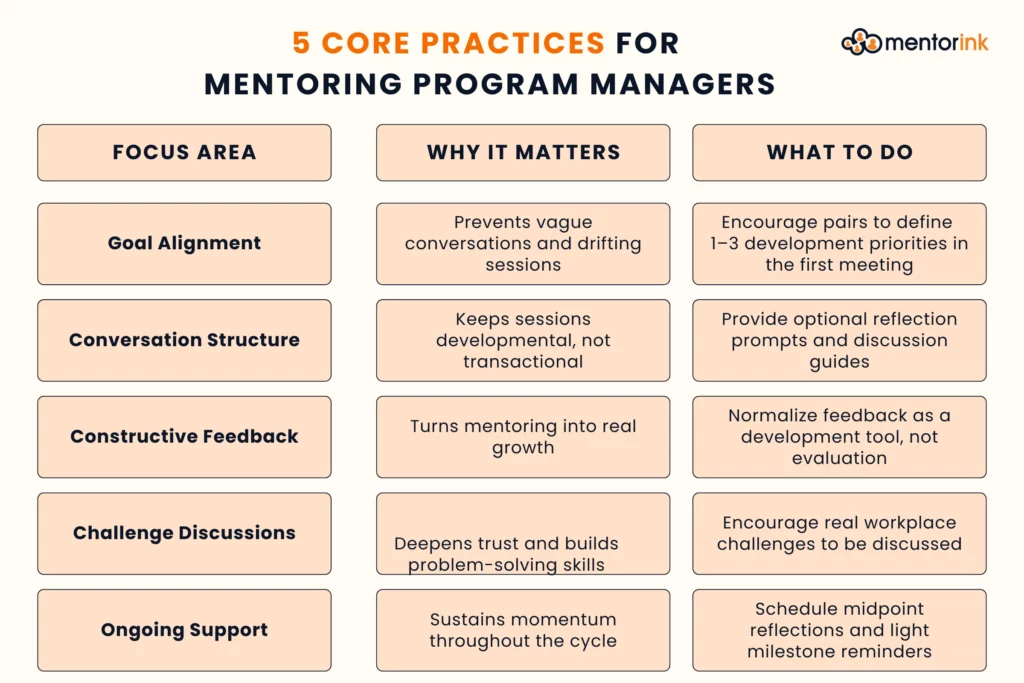
Start with Clear Goal Alignment
Every mentoring relationship should begin with clarity.
Encourage mentors and mentees to openly discuss:
- What they expect from the program
- What success looks like for them
- Which 1–3 development priorities matter most right now
When goals are named early, conversations become more intentional. Instead of general catch-ups, sessions stay aligned with growth.
Program managers can support this by providing a simple goal-setting template or a short reflection form for the first meeting. Light guidance at the beginning prevents confusion later.
Provide Light Conversation Structure
Not every mentoring session naturally becomes deep and developmental. Without guidance, conversations can stay at surface level and turn into routine updates.
Program managers can help by offering optional prompts that encourage reflection and growth.
Examples include:
- What challenge are you currently navigating?
- Which skill would most accelerate your development right now?
- What decision are you unsure about?
- Where do you need more exposure or visibility?
These prompts are not scripts. They simply give pairs a starting point when conversations feel stuck.
A small amount of structure increases quality without reducing autonomy.
Encourage Constructive Feedback
High-performing mentoring relationships integrate feedback intentionally, not accidentally.
However, many mentors and mentees hesitate to give honest feedback because they do not want to appear critical or uncomfortable. This is where program managers can make a difference by normalizing feedback as a development tool rather than a performance evaluation.
Encourage pairs to:
- Share observations, not judgments
- Focus on growth, not flaws
- Ask for feedback proactively
- Reflect on progress regularly
You can also suggest simple questions such as:
- What is one strength I should continue building on?
- What is one area where I could improve?
When feedback feels safe and structured, mentoring conversations become more developmental and less transactional.
Create Space for Real Challenges
Mentoring relationships deepen when real challenges are discussed, not just updates.
Encourage mentors and mentees to move beyond status conversations and explore current obstacles. These might include difficult workplace dynamics, career uncertainty, skill gaps, or leadership dilemmas.
Program managers can gently reinforce this by reminding pairs that mentoring is a safe space for reflection and problem-solving.
Helpful prompts include:
- What situation is currently stretching you the most?
- What conversation are you avoiding?
- What feels unclear in your next career step?
When challenges are openly discussed, mentees develop stronger problem-solving skills and greater resilience. At the same time, mentors gain better insight into the mentee’s real context.
Mentoring creates real development when it tackles real problems.
I encourage all of you to seek out teachers and mentors that challenge you to think for yourself and guide you to find your own voice.
Renee Olstead
Provide Ongoing Support
Mentoring relationships thrive when program managers remain available and attentive throughout the cycle.
Support does not mean supervising conversations. It means ensuring that mentors and mentees know they are not navigating the process alone. Small, consistent touchpoints can make a significant difference in maintaining momentum.
You can provide ongoing support by:
- Scheduling brief midpoint reflections
- Sending milestone reminders
- Encouraging goal reviews during the cycle
- Offering guidance if either participant feels uncertain
- Making it easy to request help or adjustments
Rather than focusing on detailed reporting, look for simple signals. Are meetings happening regularly? Do participants feel the relationship is useful? Is anyone experiencing friction?
When managers provide steady but non-intrusive support, mentoring relationships remain active, focused, and sustainable.
Conclusion
Effective mentoring programs are not built on perfect matching alone. They are sustained through clarity, consistency, and thoughtful support.
When program managers encourage goal alignment, structure meaningful conversations, normalize feedback, create space for real challenges, and remain steadily supportive, mentoring relationships become more focused and impactful.
Long-term mentoring success is rarely accidental. It is the result of intentional structure and steady stewardship. Mentoring succeeds when it is actively supported, not passively observed.
Mentorink Is Here to Support You
Running a mentoring program requires more than coordination. It requires visibility, structure, and timely insight.
At Mentorink, our award-winning and proven customer success team works alongside mentoring program managers at every stage. From strengthening engagement and refining matching strategies to helping you interpret participation data and improve outcomes, we support you in building programs that last.
Because sustaining mentoring requires continuous support, and you should not have to manage it alone.